Bogoslof 1906/3
Start: March 1906 ± 1 Months [1]
Stop: January 1907 ± 3 Months [2]
Event Type: Explosive
Max VEI: 3 [3]
Description: The Smithsonian Volcanoes of the World book and the Global Volcanism Program online database considers the time period between March, 1906, and September, 1907, to be one eruption at Bogoslof. However, the GeoDIVA database has separated the formation and destruction of Metcalf Cone (March, 1906-January, 1907) as one eruption, and the formation and destruction of McCulloch Peak (January 1907-September 1907) is treated as a separate eruption.
From Miller and others, 1998: "In 1906, a dome bearing a broken spire at its summit appeared midway between Old and New Bogoslof. This structure, called Metcalf Cone, exploded in late 1906 or early 1907, destroying its southern extent." Lieutenant-Commander Garrett first saw Metcalf Cone, and proposed for it the name Metcalf Cone.
On July 10, the USRCS Thetis "reconnoitered Bogoslof" and reported "* * * observed that a new island had sprung up between the two old ones, about 1/3 of the distance from the first one (which came up in 1801) to the second (1881) and connected to the first one by a ridge of land; a long spit runs out form the Southern end of the new island, just as one runs from each of the others. A crater pouring, firth vapor, is opened on the North side about 3/4 of the way up, and all around the island, vapor is spurting up through fissures, and the vapor is so thick over the surface of the island that it looks like bank of snow. There is no indication of boiling water, reported by Dirks, around the island. Sounded in 175 fms of water, within in three miles of the island, showing no general upheaval, but the water appears to be shoaler between the islands than it formerly were." These logbook pages are viewable at http://oldweather.s3.amazonaws.com/ow3/final/USS%20Thetis/vol610/vol610_040_0.jpg and http://oldweather.s3.amazonaws.com/ow3/final/USS%20Thetis/vol610/vol610_040_1.jpg .
Later, members of the S.S. Perry saw the same structure, and, not knowing of Garrett's previous name for it, called it Perry Peak." Logbooks from the US Revenue Cutter Service Perry are available at http://www.oldweather.org/ships/523c928e68f4b82a89000002. The July 29, 1906 sighting is recorded on this page: http://oldweather.s3.amazonaws.com/ow3/final/Commodore%20perry//Volumes/Seagate%20Backup%20Plus%20Drive/Arfon-JPEGS/RG26/COMMODORE%20PERRY//vol183/vol183_026_1.jpg .
Jaggar (1908) states that the activity began in March, 1906, and summarizes various accounts and articles of this eruption as follows: "Lieutenant-Commander Garrett, U.S.N., reported that the Albatross reached the Bogoslof Islands May 29, 1906, and found a steaming new cone midway between the two older islands. It was connected with Grewingk by a low flat ridge, but separated by a channel from Castle Rock. This channel was later sounded by officers of the Revenue S.S. Perry, and seven fathoms were reported. Garrett wrote: 'The new land is conical in appearance, and consists of a mass of eruptive rocks, among which traces of sulphur are plainly visible. It possesses no distinct crater, but numerous vents among the rocks, from which volumes of steam issued.' The summit showed a broken horn bending to the northeast, 'as though the mass had been forced up through an aperture while in a plastic condition, the sides being quite smooth.' This horn proved a remarkable feature, and the key to the whole structure.
" * * * Garrett's suggestion of a rising plastic mass was correct. He proposed for the new hill the name 'Metcalf Cone' in honour of Secretary Metcalf.
"Mr. Robert Dunn visited the new cone in a schooner in July, 1906, and climbed the new peak. He saw that the pudding-like cone had a solid rock core, and that the salt-water lagoon which half encircled it on the north had a temperature varying from seventy to ninety degrees. There was no noise. The pinnacle on the summit was like a great parrot's beak, rounded and smooth on the west, but making an overhanging cliff forty feet high on the east. The steam-vents gave temperatures varying from 94 to 212 degrees, and the hottest vent, at the foot of the parrot cliff, was adjacent to rock practically incandescent, for here a piece of paper burst into flame. The top of the spine was about 390 feet above sea-level by pocket barometer."
Jaggar (1930) states that "at the beginning of 1907 Metcalf Cone was broken in two, while the channel between it and Castle Rock had filled itself with a new steaming heap of lava."
Newhall and Melson (1983) estimate that the volume of the Metcalf, McCullogh, and Tahoma Peak lava domes (1906-1910) was about 5x10^6 cubic meters. Simkin and Siebert (2002-) estimate a tephra volume of 5.1 +/- 5.0 x 10^8 cubic meters, based on Sapper's (1927) classification.
From Miller and others, 1998: "In 1906, a dome bearing a broken spire at its summit appeared midway between Old and New Bogoslof. This structure, called Metcalf Cone, exploded in late 1906 or early 1907, destroying its southern extent." Lieutenant-Commander Garrett first saw Metcalf Cone, and proposed for it the name Metcalf Cone.
On July 10, the USRCS Thetis "reconnoitered Bogoslof" and reported "* * * observed that a new island had sprung up between the two old ones, about 1/3 of the distance from the first one (which came up in 1801) to the second (1881) and connected to the first one by a ridge of land; a long spit runs out form the Southern end of the new island, just as one runs from each of the others. A crater pouring, firth vapor, is opened on the North side about 3/4 of the way up, and all around the island, vapor is spurting up through fissures, and the vapor is so thick over the surface of the island that it looks like bank of snow. There is no indication of boiling water, reported by Dirks, around the island. Sounded in 175 fms of water, within in three miles of the island, showing no general upheaval, but the water appears to be shoaler between the islands than it formerly were." These logbook pages are viewable at http://oldweather.s3.amazonaws.com/ow3/final/USS%20Thetis/vol610/vol610_040_0.jpg and http://oldweather.s3.amazonaws.com/ow3/final/USS%20Thetis/vol610/vol610_040_1.jpg .
Later, members of the S.S. Perry saw the same structure, and, not knowing of Garrett's previous name for it, called it Perry Peak." Logbooks from the US Revenue Cutter Service Perry are available at http://www.oldweather.org/ships/523c928e68f4b82a89000002. The July 29, 1906 sighting is recorded on this page: http://oldweather.s3.amazonaws.com/ow3/final/Commodore%20perry//Volumes/Seagate%20Backup%20Plus%20Drive/Arfon-JPEGS/RG26/COMMODORE%20PERRY//vol183/vol183_026_1.jpg .
Jaggar (1908) states that the activity began in March, 1906, and summarizes various accounts and articles of this eruption as follows: "Lieutenant-Commander Garrett, U.S.N., reported that the Albatross reached the Bogoslof Islands May 29, 1906, and found a steaming new cone midway between the two older islands. It was connected with Grewingk by a low flat ridge, but separated by a channel from Castle Rock. This channel was later sounded by officers of the Revenue S.S. Perry, and seven fathoms were reported. Garrett wrote: 'The new land is conical in appearance, and consists of a mass of eruptive rocks, among which traces of sulphur are plainly visible. It possesses no distinct crater, but numerous vents among the rocks, from which volumes of steam issued.' The summit showed a broken horn bending to the northeast, 'as though the mass had been forced up through an aperture while in a plastic condition, the sides being quite smooth.' This horn proved a remarkable feature, and the key to the whole structure.
" * * * Garrett's suggestion of a rising plastic mass was correct. He proposed for the new hill the name 'Metcalf Cone' in honour of Secretary Metcalf.
"Mr. Robert Dunn visited the new cone in a schooner in July, 1906, and climbed the new peak. He saw that the pudding-like cone had a solid rock core, and that the salt-water lagoon which half encircled it on the north had a temperature varying from seventy to ninety degrees. There was no noise. The pinnacle on the summit was like a great parrot's beak, rounded and smooth on the west, but making an overhanging cliff forty feet high on the east. The steam-vents gave temperatures varying from 94 to 212 degrees, and the hottest vent, at the foot of the parrot cliff, was adjacent to rock practically incandescent, for here a piece of paper burst into flame. The top of the spine was about 390 feet above sea-level by pocket barometer."
Jaggar (1930) states that "at the beginning of 1907 Metcalf Cone was broken in two, while the channel between it and Castle Rock had filled itself with a new steaming heap of lava."
Newhall and Melson (1983) estimate that the volume of the Metcalf, McCullogh, and Tahoma Peak lava domes (1906-1910) was about 5x10^6 cubic meters. Simkin and Siebert (2002-) estimate a tephra volume of 5.1 +/- 5.0 x 10^8 cubic meters, based on Sapper's (1927) classification.
Images
References Cited
[1] The evolution of Bogoslof volcano, 1908
Jaggar, T. A., 1908, The evolution of Bogoslof volcano: Bulletin of the American Geographical Society of New York, v. 40, p. 385-400.[2] Geology of Umnak and Bogoslof Islands, Aleutian Islands, Alaska, 1959
Byers, F. M. Jr., 1959, Geology of Umnak and Bogoslof Islands, Aleutian Islands, Alaska: in Investigations of Alaskan volcanoes, U.S. Geological Survey Bulletin 1028-L, p. 267-369, 5 sheets, scale 1 at 1:63,360, 1 at 1:96,000, and 1 at 1:300,000. full-text PDF 3.5 MB
plate 39 PDF 2.2 MB
plate 40 PDF 3.9 MB
plate 41 PDF 5.6 MB
plate 48 PDF 85 KB
table 3 PDF 149 KB
full-text PDF 3.5 MB
plate 39 PDF 2.2 MB
plate 40 PDF 3.9 MB
plate 41 PDF 5.6 MB
plate 48 PDF 85 KB
table 3 PDF 149 KB [3] Volcanoes of the world [2nd edition], 1994
Simkin, Tom, and Siebert, Lee, 1994, Volcanoes of the world [2nd edition]: Tucson, Arizona, Geoscience Press, 349 p.[4] Bogoslof the moving island, 1943
Hunnicutt, E. W., 1943, Bogoslof the moving island: Alaska Life, v. 6, n. 4, p. 55-58.[5] Recent changes in Bogoslof volcano, 1916
Powers, Sidney, 1916, Recent changes in Bogoslof volcano: Geographical Review, v. 2, n. 3, p. 218-221.[6] Exploring Aleutian volcanoes, 1948
Robinson, G. D., 1948, Exploring Aleutian volcanoes: National Geographic Magazine, v. 94, n. 4, p. 509-528.[7] Recent activity of Bogoslof Volcano, 1930
Jaggar, T. A., 1930, Recent activity of Bogoslof Volcano: The Volcano Letter, v. 275, p. 1-3.
full-text PDF 789 KB [8] Recent volcanic eruptions in the Bering Sea, 1908
Eakle, A. S., 1908, Recent volcanic eruptions in the Bering Sea: Mining and Scientific Press, v. 96, p. 353.[9] Notes on recent changes in the Bogoslof Islands, 1908
Smith, P. S., 1908, Notes on recent changes in the Bogoslof Islands: Science, v. 27, n. 696, p. 695.[10] Evolution of Bogoslof volcano, 1931
Jaggar, T. A., 1931, Evolution of Bogoslof volcano: The Volcano Letter, v. 322, p. 1-3.
full-text PDF 771 KB [11] Journal of the technology expedition to the Aleutian Islands, 1907, 1908
Jaggar, T. A., 1908, Journal of the technology expedition to the Aleutian Islands, 1907: The Technology Review, v. 10, n. 1, p. 1-37.[12] On the chase for volcanoes, 1908
Dunn, Robert, 1908, On the chase for volcanoes: The Outing Magazine, v. 51, p. 540-550.Complete Eruption References
Volcanoes of the world: an illustrated catalog of Holocene volcanoes and their eruptions, 2003
Siebert, L., and Simkin, T., 2002-, Volcanoes of the world: an illustrated catalog of Holocene volcanoes and their eruptions: Smithsonian Institution, Global Volcanism Program Digital Information Series GVP-3, http://volcano.si.edu/search_volcano.cfm, unpaged internet resource.

Catalog of the historically active volcanoes of Alaska, 1998
Miller, T. P., McGimsey, R. G., Richter, D. H., Riehle, J. R., Nye, C. J., Yount, M. E., and Dumoulin, J. A., 1998, Catalog of the historically active volcanoes of Alaska: U.S. Geological Survey Open-File Report 98-0582, 104 p.
intro and TOC PDF 268 KB
references PDF 43 KB 
Volcanoes of the world [2nd edition], 1994
Simkin, Tom, and Siebert, Lee, 1994, Volcanoes of the world [2nd edition]: Tucson, Arizona, Geoscience Press, 349 p.
Hard Copy held by AVO at FBKS - CEC shelf
Explosive activity associated with the growth of volcanic domes, 1983
Newhall, C. G., and Melson, W. G., 1983, Explosive activity associated with the growth of volcanic domes: Journal of Volcanology and Geothermal Research, v. 17, n. 1/4, p. 111-131.
Hard Copy held by AVO at FBKS - CEC file cabinet
Geology of Umnak and Bogoslof Islands, Aleutian Islands, Alaska, 1959
Byers, F. M. Jr., 1959, Geology of Umnak and Bogoslof Islands, Aleutian Islands, Alaska: in Investigations of Alaskan volcanoes, U.S. Geological Survey Bulletin 1028-L, p. 267-369, 5 sheets, scale 1 at 1:63,360, 1 at 1:96,000, and 1 at 1:300,000.
full-text PDF 3.5 MB
plate 39 PDF 2.2 MB
plate 40 PDF 3.9 MB
plate 41 PDF 5.6 MB
plate 48 PDF 85 KB
table 3 PDF 149 KB 
My experiments with volcanoes, 1956
Jaggar, T.A., 1956, My experiments with volcanoes: Honolulu, Hawaiian Volcano Research Association, 198 p.
Exploring Aleutian volcanoes, 1948
Robinson, G. D., 1948, Exploring Aleutian volcanoes: National Geographic Magazine, v. 94, n. 4, p. 509-528.

Volcanoes declare war: logistics and strategy of Pacific volcano science, 1945
Jaggar, T. A., 1945, Volcanoes declare war: logistics and strategy of Pacific volcano science: Honolulu, Paradise of the Pacific, Ltd, 166 p.
Bogoslof the moving island, 1943
Hunnicutt, E. W., 1943, Bogoslof the moving island: Alaska Life, v. 6, n. 4, p. 55-58.

Evolution of Bogoslof volcano, 1931
Jaggar, T. A., 1931, Evolution of Bogoslof volcano: The Volcano Letter, v. 322, p. 1-3.
full-text PDF 771 KB 
Recent activity of Bogoslof Volcano, 1930
Jaggar, T. A., 1930, Recent activity of Bogoslof Volcano: The Volcano Letter, v. 275, p. 1-3.
full-text PDF 789 KB 
Vulkankunde, 1927
Sapper, Karl, 1927, Vulkankunde: Stuttgart, Germany, Englehorn Verlag, 424 p.
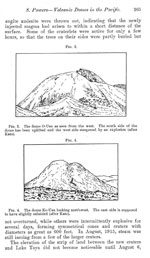
Volcanic domes in the Pacific, 1916
Powers, Sidney, 1916, Volcanic domes in the Pacific: American Journal of Science, v. 42, p. 261-274.
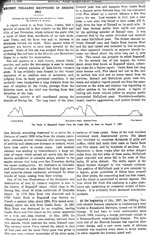
Recent volcanic eruptions in the Bering Sea, 1908
Eakle, A. S., 1908, Recent volcanic eruptions in the Bering Sea: Mining and Scientific Press, v. 96, p. 353.
Journal of the technology expedition to the Aleutian Islands, 1907, 1908
Jaggar, T. A., 1908, Journal of the technology expedition to the Aleutian Islands, 1907: The Technology Review, v. 10, n. 1, p. 1-37.

The evolution of Bogoslof volcano, 1908
Jaggar, T. A., 1908, The evolution of Bogoslof volcano: Bulletin of the American Geographical Society of New York, v. 40, p. 385-400.

On the chase for volcanoes, 1908
Dunn, Robert, 1908, On the chase for volcanoes: The Outing Magazine, v. 51, p. 540-550.
Hard Copy held by AVO at FBKS - CEC file cabinet
Logbooks of the U.S. Revenue Cutter Service Thetis, 1906 and 1907, 1907
Logbooks of the U.S. Revenue Cutter Service Thetis 1906 and 1907, 1907. Transcripts available at https://classic.oldweather.org/ships/500dc361cd0db40002000025 .
Logbooks of the U.S. Revenue Cutter Service Perry, 1906
Logbooks of the U.S. Revenue Cutter Service Perry, 1906. Transcripts available at http://www.oldweather.org/ships/523c928e68f4b82a89000002 .