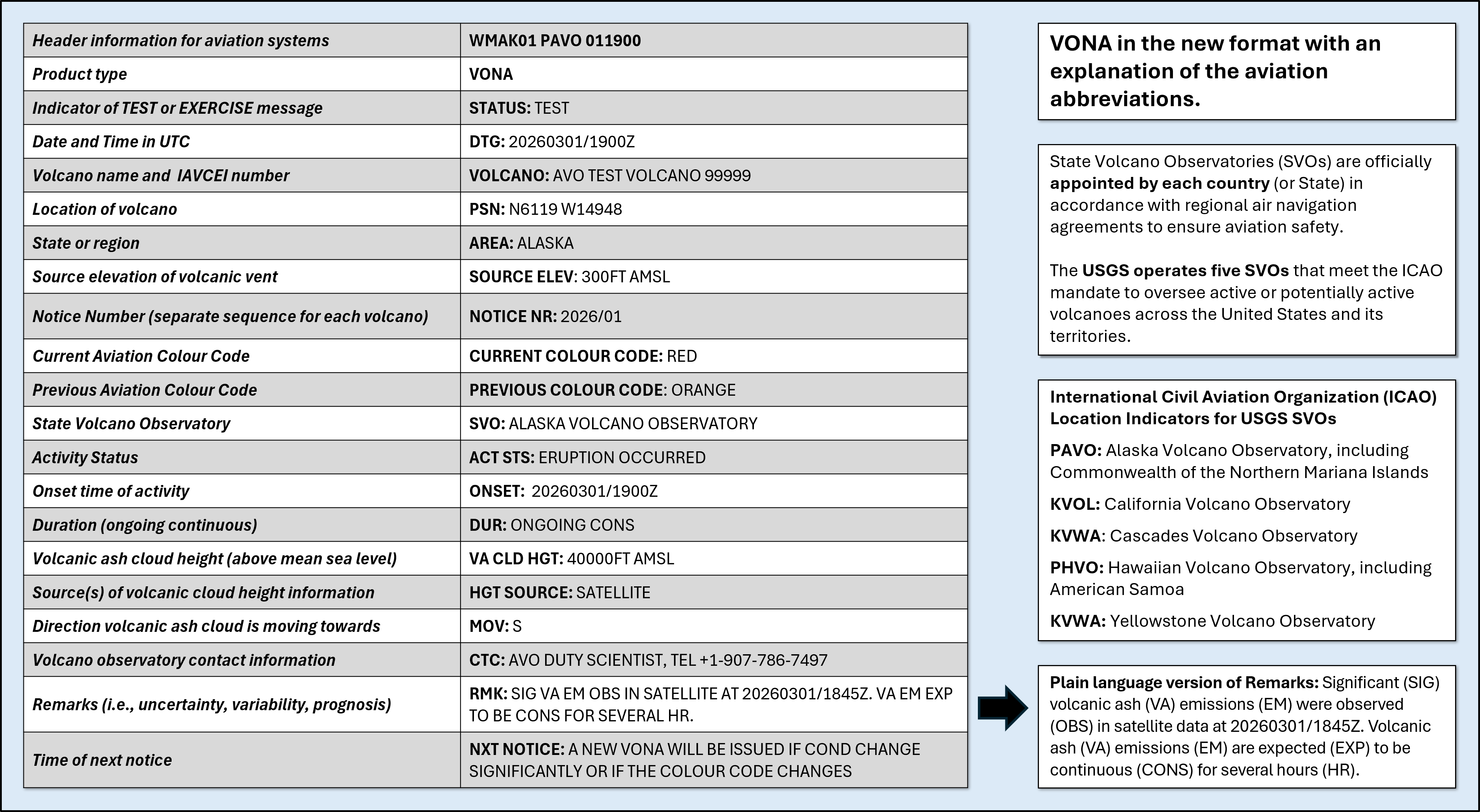
Beginning in early March 2026, the U.S. Geological Survey will introduce updated Volcano Observatory Notices to Aviation (VONAs) that follow new standards set by the International Civil Aviation Organization (ICAO).
The new VONA format features all-caps text, aviation-specific terminology, and, for the first time, a machine-readable version designed for seamless integration into aviation communication and flight-planning systems.VONAs are issued to alert aviation professionals—including aviation meteorologists, air traffic controllers, pilots, and airline dispatchers—to volcanic activity that could affect flight safety. The update aligns U.S. VONAs with international recommended practices and ensures consistency with other aviation warning products distributed through the Aeronautical Fixed System of communication.
These changes apply only to VONA recipients. The USGS will continue to provide plain-language volcano information for general audiences through products such as Volcano Activity Notices, regular status updates, and topical information statements. Anyone can sign up to receive these messages through the USGS Volcano Notification Service (VNS).
Below is example of the new ICAO‑aligned VONA format. The update marks a significant improvement for aviation users while maintaining continuity for the broader public who rely on clear, accessible volcano information through the VNS.
×
![Instrument data]()