Shishaldin 1898/4
Start: April 1898 [1]
Event Type: Explosive
Max VEI: 2 [2]
- Lava flow [1]
- "Fire", "Glowing", or incandescence [1]
- Tephra plume [1]
Description: The April 29, 1898 logbook entry for the US Revenue Cutter Service vessel Bear reads, in part: "Mid to 4 A.M. * * * 3:00 saw Shishaldin volcano in eruption, smoke and flames." Images of the logbook are available at the Old Weather project website: http://oldweather.s3.amazonaws.com/ow3/final/USRC%20Bear/vol079/vol079_164_1.jpg , http://oldweather.s3.amazonaws.com/ow3/final/USRC%20Bear/vol079/vol079_163_0.jpg , http://oldweather.s3.amazonaws.com/ow3/final/USRC%20Bear/vol079/vol079_164_0.jpg .
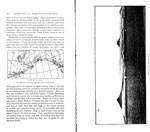
Stanley-Brown (1899) writes "There are two very intelligent and well-to-do traders (Charles Rosenberg and Charles Swanson) who live with their families at Morshovia village, near the base of the mountain [Shishaldin]. While on a trip in their schooner to Dutch Harbor, Unalaska Bay, last summer [1898?] for supplies they told me that the volcano is now in a state of eruption, and that at night they had seen, high on the slopes, tongues of molten lava creeping slowly down the mountain side and branching around obstacles lying in their course, thus leaving islands between the fiery streams. They asserted also that ashes are ejected from the crater, and that on hunting trips they had ascended far enough to detect the heat and recognize the sulphurous fumes."
Stanley-Brown (1899) writes "There are two very intelligent and well-to-do traders (Charles Rosenberg and Charles Swanson) who live with their families at Morshovia village, near the base of the mountain [Shishaldin]. While on a trip in their schooner to Dutch Harbor, Unalaska Bay, last summer [1898?] for supplies they told me that the volcano is now in a state of eruption, and that at night they had seen, high on the slopes, tongues of molten lava creeping slowly down the mountain side and branching around obstacles lying in their course, thus leaving islands between the fiery streams. They asserted also that ashes are ejected from the crater, and that on hunting trips they had ascended far enough to detect the heat and recognize the sulphurous fumes."
References Cited
[1] Shishaldin as a field for exploration, 1899
Stanley-Brown, J.., 1899, Shishaldin as a field for exploration: National Geographic Magazine, v. 10, n. 8, p. 281-288.[2] Volcanoes of the world [2nd edition], 1994
Simkin, Tom, and Siebert, Lee, 1994, Volcanoes of the world [2nd edition]: Tucson, Arizona, Geoscience Press, 349 p.Complete Eruption References
Volcanoes of the world [2nd edition], 1994
Simkin, Tom, and Siebert, Lee, 1994, Volcanoes of the world [2nd edition]: Tucson, Arizona, Geoscience Press, 349 p.
Hard Copy held by AVO at FBKS - CEC shelf
Shishaldin as a field for exploration, 1899
Stanley-Brown, J.., 1899, Shishaldin as a field for exploration: National Geographic Magazine, v. 10, n. 8, p. 281-288.
Logbooks of the U.S. Revenue Cutter Service Bear, 1898
Logbooks of the U.S. Revenue Cutter Service Bear. Transcripts available at http://www.oldweather.org/ships/500dc362cd0db40002000455 .