Aleutians
(52.0765, -176.1109) WATCH
WATCH 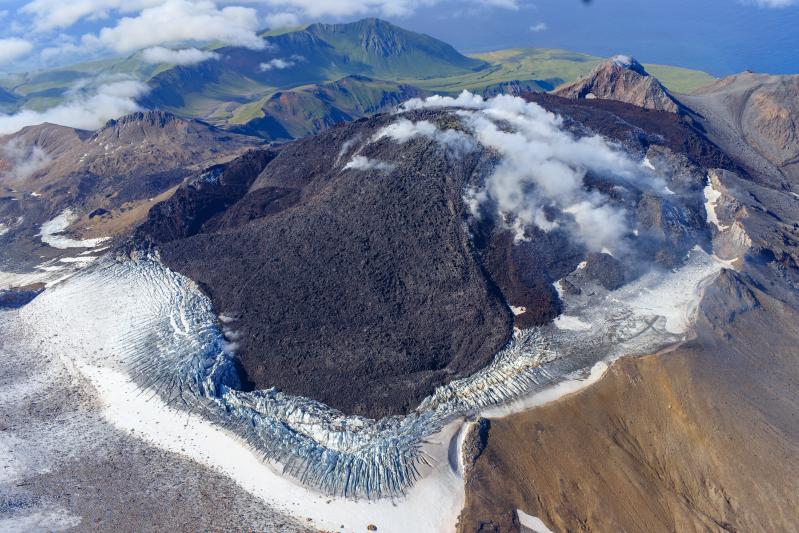
Slow eruption of lava continues. Minor seismicity detected over the past day. Continued advance of the eastern lava flow and continued growth of the lava dome was observed high spatial resolution satellite from June 6. No other activity was observed in clear to partly cloudy satellite data.
The current eruption began in July 2021 and, since then, lava flows have filled most of the summit crater and advanced into valleys below. There have been no explosions at Great Sitkin Volcano since an event in May 2021. The volcano is monitored using local seismic and infrasound sensors, satellite data, webcams, and regional infrasound and lightning networks.
 Instrumented
Aleutians
(54.7554, -163.9711) ADVISORY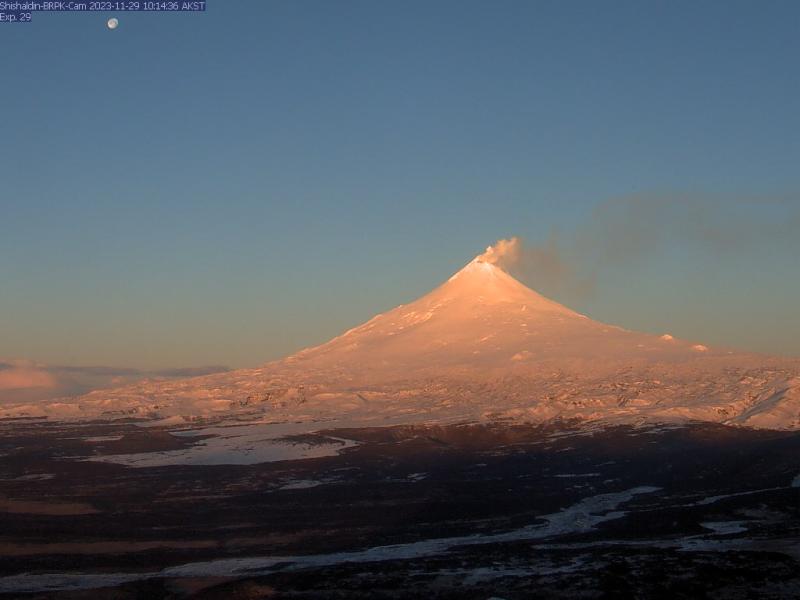
Unrest continues. Minor seismic activity and infrasound were detected at the volcano. A robust degassing plume from the summit crater was observed in clear web cam images and satellite data from yesterday afternoon showed typical sulfur dioxide emissions. No other activity was observed in satellite data.
Local seismic and infrasound sensors, web cameras, and a geodetic network are used to monitor Shishaldin Volcano. In addition to the local monitoring network, AVO uses nearby geophysical networks, regional infrasound and lightning data, and satellite images to detect eruptions.
Instrumented
Alaska Peninsula
(56.0126, -159.7912)Occasional earthquakes continued over the past day. Steaming from the fumarole field field located to the west of the summit of Mount Kupreanof was observed in high spatial resolution satellite images. No other activity was observed in satellite data.
There is no real-time geophysical monitoring network at Mount Kupreanof. The closest functioning seismometers are approximately 17 miles (27 km) to the east of the volcano as part of the Mount Veniaminof network. Mount Kupreanof is also monitored by satellite data, remote infrasound and lightning networks, and visual observations from pilots and mariners passing by the volcano.
Instrumented